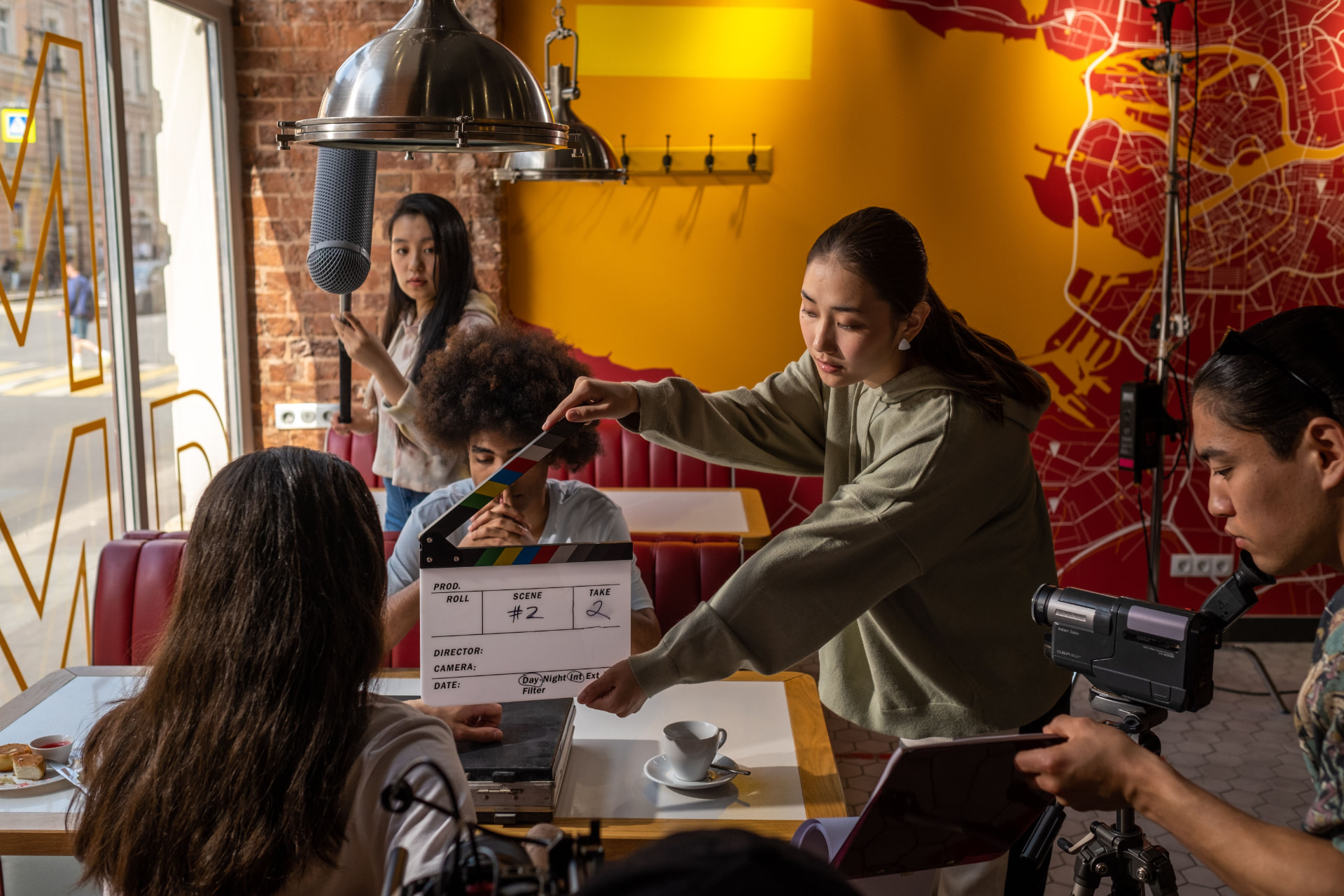
Safe hours and purpose
Structured creative time in the evenings and summers, with a crew that expects you to show up.
Turn something you care about into a story worth making.
Students begin with lived experience, observation, research, and the people or places they know.
In practice: Pitch the idea, identify the audience, and define why the story belongs on screen.
Writer, story producer, researcher
A filmmaking program does more for a neighborhood than teach a skill. It gives young people a reason to be in the same room with each other and with adults who take them seriously, and it turns the things they already know about their city into work that other people want to watch. Every film made here puts a young person on a crew, in a role, with a deadline and a team that depends on them. That experience travels. It shows up in how they speak in a classroom, how they handle a job, and how the neighborhood is described by the people who actually live in it. Over time a community with its own storytellers stops being a subject and becomes an author.
Structured creative time in the evenings and summers, with a crew that expects you to show up.
Camera, sound, editing, producing and writing are working trades with local jobs behind them.
Working filmmakers and community adults stay in touch beyond the program.
The neighborhood is portrayed by the people who live in it, not by outsiders.
Every participant leaves with finished work they can show.
Public screenings bring families, schools and neighbors together around young people's work.
ICFC is a Boston youth filmmaking and mentorship initiative where young people make real films, together.
From the first idea to the final screening, students learn the complete craft by joining a crew and doing the work.
Filmmaking gives young people a constructive way to express themselves, build confidence, develop practical skills, and create opportunity, supported by mentorship and positive alternatives to violence.
Students develop ideas, write scripts, direct, operate cameras, act, record sound, edit, and present finished work. Every stage becomes part of one connected production experience.
Young people do more than learn about film. They make films together, take responsibility for real production roles, and connect the craft to stories rooted in their own communities.